What If....There's a 2029 AI CAPEX Crash (M)
Part 1 - Environment, Fuel, and Trigger
2026 continues apace with headline risks & innovation announcements pumping out so frequently, the market seems to have simply gone numb and fallen back to a traditional “Up and to the Right” mentality from tech.
Tech’s earning calls reported stellar Q1 revenue and upbeat guidance going forward. Semi-conductors (SOX) led the way with strong booked sales while the hyperscalers —massive cloud computing providers like AWS, Microsoft Azure, and Google Cloud— are readying for the baton pass. Most hyperscaler providers are forecasting immense sales growth once they deploy all those semi-conductor products they purchased. The plans bring new AI Compute datacenters online through 2028. So far so good.

Hyperscalers aim to launch that expanded datacenter capacity to service their forecasted demand for AI compute — the calculations done by an AI model to generate the image, video or text answer to your prompted questions.
When measured in the form of AI Compute (token) utilization, hyperscaler companies signaled an insane 40% QoQ earnings growth rate — with multi year consistency at that level expected as well.
Therefore, since companies believe in these growth numbers & that AI will soon be all powerful and all encompassing in the economy, they plan to build, build, build to service these new customers. And Tech is trying its hardest to pay for it all along the way.
The trouble is, it’s still difficult for many to trust these off-the-charts growth rates will be sustainable. If, down the road, AI compute demand falls short of expectations, then hyperscalers will still be on the hook to the investors’ of all this infrastructure. With little revenue to show for it all, what happens then?

Where the AI cycle stands
To understand the current cycle and sentiment of the AI boom, we can use the NASDAQ Composite index as a historical benchmark and parallel. (Any infrastructure buildout cycle could be used to similar results).
Let’s set the cycle starts as the launch of Netscape Navigator in 1994 for the Dotcom Boom and the release of ChatGPT in November 2022, kicking into high gear in 2023 for the AI Boom. By this measure, we’re about halfway through the AI bull run and crucially, not yet to the froth and blow-off top of the cycle.
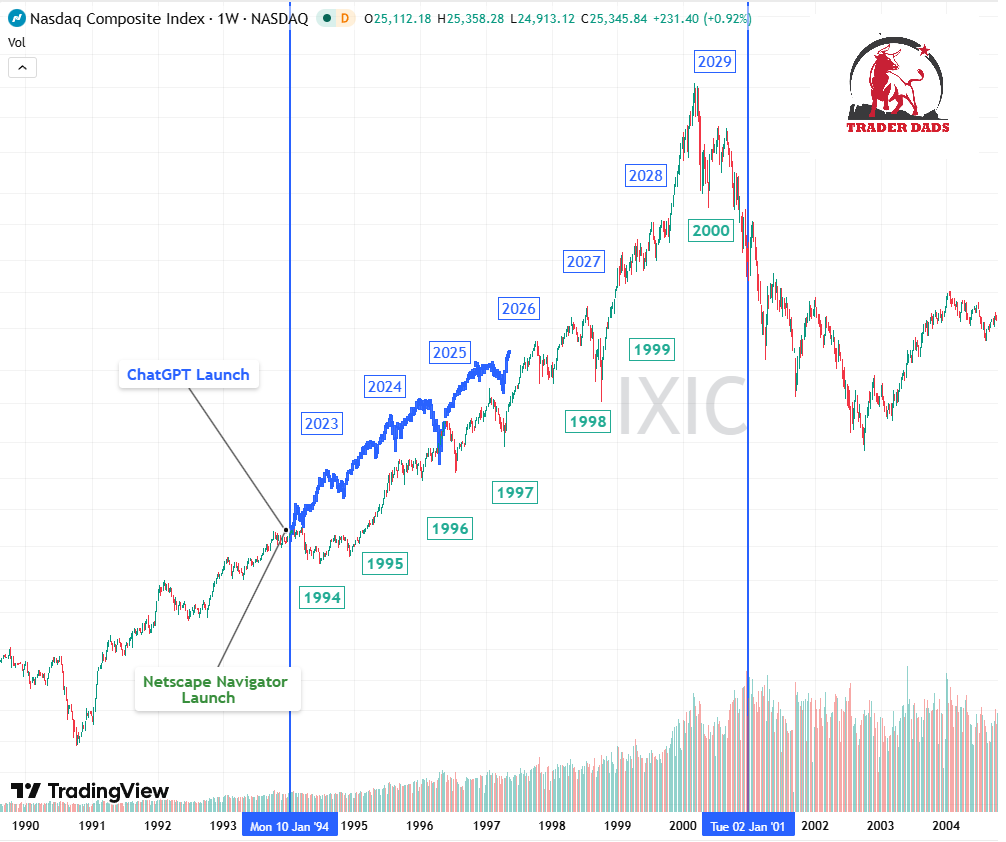
Much like the massive physical infrastructure buildout of the 1990s internet boom, massive AI datacenter investments are propping up today's economy. But while the dotcom era drove >20% of economic growth, the AI boom is far more extreme.
In Q1 2026, AI infrastructure accounted for 1.38% of the 2.0% total real GDP growth—meaning this single sector drove nearly 70% of the broader economy.
This means the U.S. economy and big name Tech companies are All-In on AI computing power being a successful business venture providing major productivity growth.
TRADERDAD5
For $5 OFF ORDER

Pay to Build
Remember all those semi-conductor products the hyperscalers purchased from chip manufacturers? Well, they’re expensive. Very expensive. Over $1Trillion is expected to be spent through 2027, which should keep the economic engine running for awhile on paper. Still so far, so good.
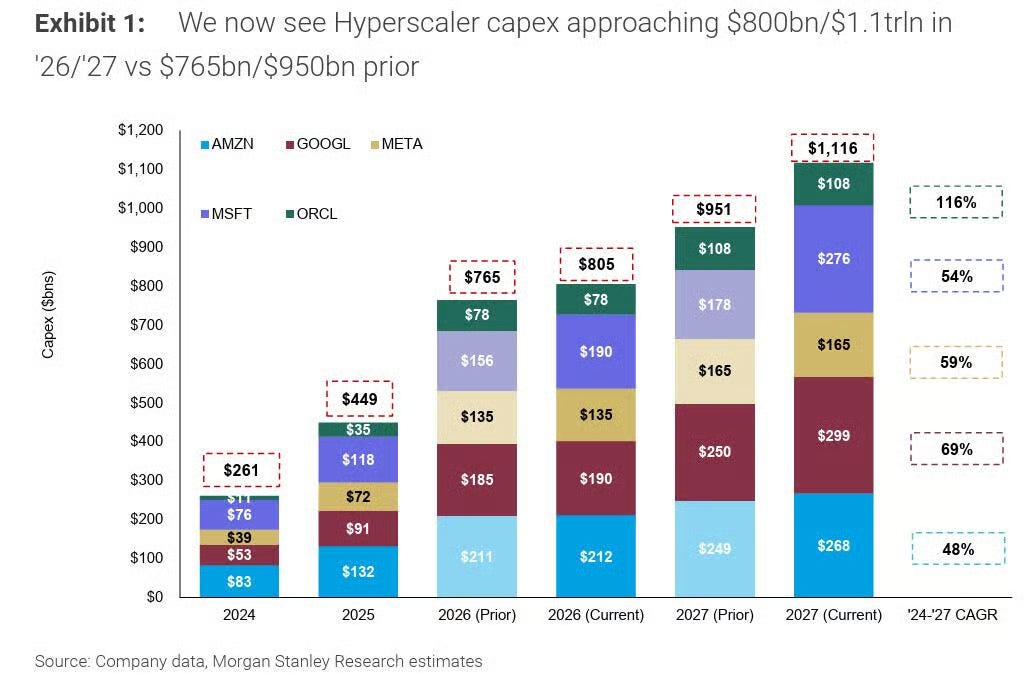
But here’s the catch. That $1Trillion+ is being paid for with debt. Corporate bond markets are being saturated with debt issuances so heavily, Wall Street has started looking to all sorts of alternative vehicles to spread out the risk and just gather enough capital.
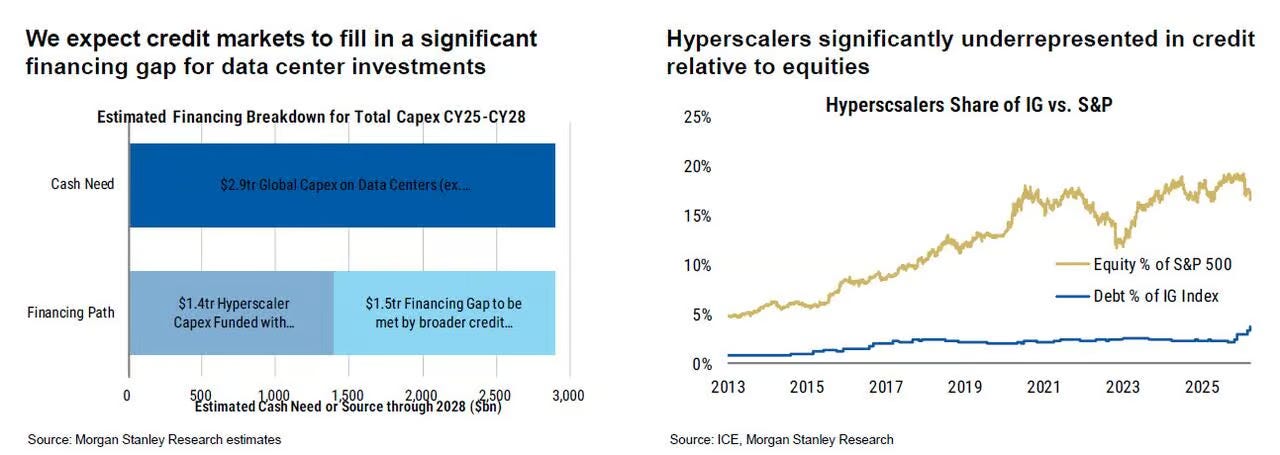
Numbers that size can lose all meaning but one metric is important to keep notice on: Free Cashflow for hyperscalers.
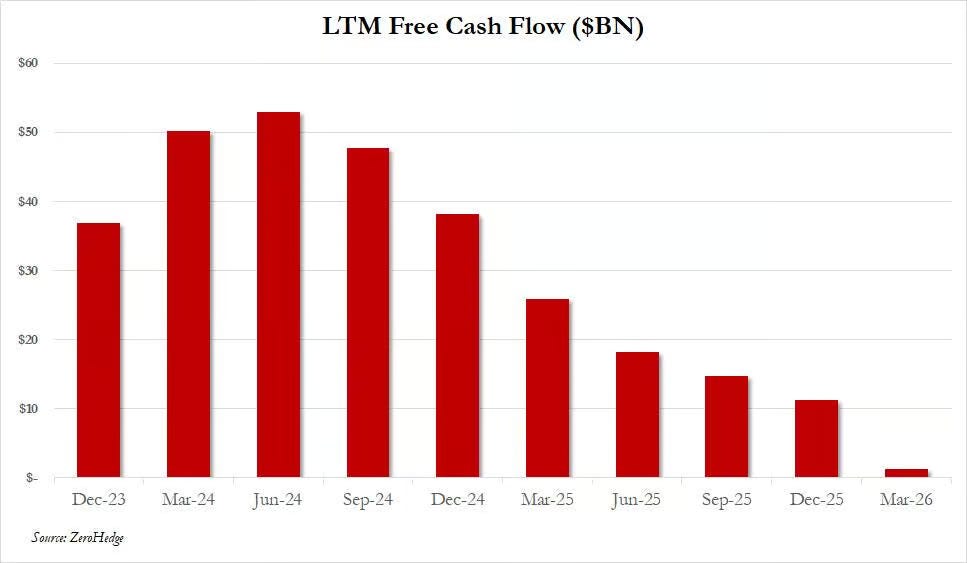
It’s already at or near zero forcing mature technology companies like Google and Meta to pay attention to their cash burndown needs like they’re a start-up again.
Debt Loaded and Fingers Crossed
To make the math work, Hyperscalers NEED that forecasted AI compute demand to materialize into fresh cashflows starting 2028 and into 2029 or default risk will start creeping into the market.
Between 1996 and 2001, telecom companies issued more than $500 billion in new corporate bonds, ultimately defaulting on half when markets realized the overcapacity fiber buildout could not be repaid.
Now Silicon Valley is creating a similar type of powder keg again.

Today’s hyperscalers are at least 2x more indebted and equally reliant on demand forecasts materializing into real productive sales to keep afloat and continue debt payments.
Next week - We’ll take a deeper dive into business model mechanics and what might light the match for a wave of defaults
For more thoughts on this idea check out some of the archived posts.


Click for our YouTube Channel to see all our AI videos
TRADERDADS MAILBAG
traderdads@substack.com